

Blog
Broward County Jails Pompano: Immigration Bond Help
That phone call can shake a whole family.
A son says he’s in jail. A husband says he was stopped, booked, and now someone mentioned immigration. A sister checks a jail site, sees a location in Broward County, and still doesn’t know the one thing that matters most. Can he come home soon, or is ICE involved now?
In the Pompano area, that confusion is common. People search for broward county jails pompano because they need fast answers, not legal theory. They need to know where their loved one is, who is holding them, whether there is an ICE hold, how bond payments work, and what mistake could slow release down.
This guide is written for that moment. It connects the local Broward jail search to the federal immigration bond process, so your family can take the next step with a clear head.
Your Loved One is Detained What Happens Now
A family usually starts with fragments.
Someone says they were taken to a Broward jail. Another person heard “Paul Rein.” Someone else says “Fort Lauderdale.” Then a clerk or another detainee mentions ICE. At that point, families often feel like the situation changed without warning.
That’s because it often does.
A person can start in local custody after an arrest in Broward County, then face an immigration hold that changes the release path. What looked like a county bond problem can turn into a federal detention problem very quickly.
The first calm move
Start with three basic facts:
- Where the person is now
- Whether there is any sign of an ICE hold
- Whether the county release will lead to freedom, or to transfer
If you only know the jail name, that’s still enough to begin.
Broward County runs a large system. It processes around 44,000 inmates annually across its facilities, which helps explain why families often feel lost in the shuffle when trying to track a loved one through the system in and around Pompano, according to Florida jail system data for Broward County.
Practical rule: Don’t wait for perfect information before you start checking. A partial name, birth date, or booking detail can be enough to begin locating someone.
What families usually get wrong
The biggest mistake is assuming that finding a local jail record means the solution is only local.
It might not be.
If ICE is involved, the key questions change. Families need to think about sponsor readiness, bond amount confirmation, payment method, collateral options, and release delays tied to federal processing. This is why many people feel blindsided. They solved one part of the problem, but not the part that controls release.
Another common mistake is waiting too long to organize documents. When ICE custody becomes part of the picture, delays often grow because the family is still gathering ID, address information, proof of relationship, or sponsor details after the bond issue is already moving.
The fastest families are rarely the ones with the least stress. They’re the ones who start the right checklist early.
How to Find Someone in a Broward County Jail
Start with the jail search before you start guessing.

When people search broward county jails pompano, they are usually trying to answer a very basic question. “Where is my loved one right now?” That first answer matters because everything after that depends on the current facility and custody status.
Broward County’s jail system is one of Florida’s largest, processing around 44,000 inmates annually across facilities that include locations near Pompano, which is one reason the system can feel hard to understand when a possible immigration hold is involved, based on Broward County jail data compiled for Florida.
What to check first
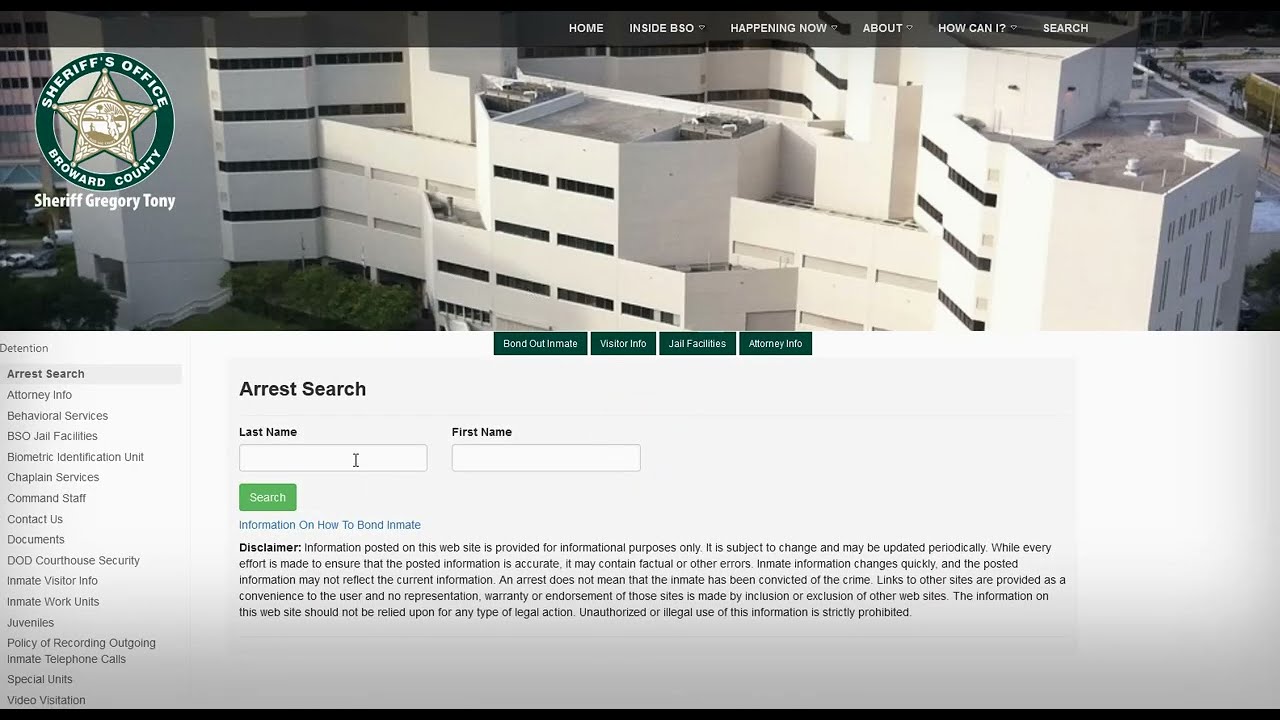
Use the Broward Sheriff’s Office inmate lookup and search carefully. If you need help understanding Florida detention lookups more broadly, this guide on how to find immigrants detained in Florida can help you connect local jail records to immigration custody questions.
Look for these details:
- Full name match: Check spelling carefully. Even one missing last name can hide the right record.
- Date of birth: This helps separate your loved one from people with similar names.
- Booking location: The record may point you to a facility such as the Main Jail in Fort Lauderdale or the Paul Rein Detention Facility in Pompano Beach.
- Housing status: This can change fast, so save what you see and keep checking.
- Hold language: If the record suggests a detainer, hold, or immigration-related restriction, treat that as a major sign that release may not be simple.
Facilities families often hear about
Some Broward-area names come up again and again during a stressful search:
- Paul Rein Detention Facility in Pompano Beach
- Main Jail in Fort Lauderdale
- Broward Transitional Center near Pompano, which is tied to ICE detention rather than ordinary county jail release in the way many families first expect
That last point matters a lot. A loved one may begin in county custody but not stay in a county-only process.
A short visual explainer can help if you’re trying to sort that out quickly:
How to spot trouble early
If the record looks simple, don’t assume it is.
Call the facility and ask plain questions. Ask whether the person has any hold that affects release. Ask whether posting a local bond would release the person to the street or whether another agency is involved. Ask where the person would go next if released from county custody.
Save screenshots, booking numbers, and names of anyone you spoke with. Families often need those details later when a transfer happens fast.
If you can’t get a straight answer from the jail record alone, that doesn’t mean nothing is happening. It often means the local and federal systems are crossing over.
County Jail vs ICE Detention What It Means for Release
A county jail hold and an ICE hold are not the same thing.
That is where many families lose time. They pay attention to the local case, assume bond means release, and then learn that ICE will still keep the person in custody.
Broward County hold vs ICE hold
| Factor | Broward County Jail Hold | ICE Hold (Immigration Detention) |
|---|---|---|
| Who is holding the person | Broward County jail staff under local custody | ICE or immigration detention authorities |
| Why the person is being held | Local arrest or county criminal case | Immigration detention issue or transfer tied to immigration status |
| What bond may apply | Local criminal bond | Immigration bond, if one is allowed |
| What happens after local release | Person may be released from county custody | Person may be transferred instead of released |
| Main family concern | Booking, local bond, court dates | Bond eligibility, sponsor documents, ICE payment process, release timing |
Why local bond may not solve the problem
If someone has only a county hold, the release path may stay local.
If someone has an ICE hold, the person can remain detained or be transferred after the county side is handled. That is why families in Broward and Pompano often say, “We paid, but he still didn’t come out.”
That result is painful, but it is not unusual when immigration detention enters the case.
The role of BTC near Pompano
The Broward Transitional Center, often called BTC, is one of the names families hear when a local custody issue becomes an immigration detention issue. Conditions there matter because delays in release are not just emotional. They can affect health, communication, and how quickly a family can respond.
In the first half of 2025, 911 calls from BTC doubled, and at least 88 calls were recorded from January through June 2025, with over 40% involving urgent issues like fainting, seizures, and chest pains, according to reporting on emergency calls from the Broward Transitional Center.
When a person is in immigration detention, every delay feels longer to the family. It also feels longer to the person inside.
What works better than guessing
Do not ask only, “What jail is he in?”
Ask these instead:
- Is this still county custody, or has ICE placed a hold?
- If the county case is resolved, will he walk out or be transferred?
- Has a bond amount been set on the immigration side?
- Who is ready to act as sponsor if bond is available?
These questions move the case forward. General worry does not.
The Immigration Bond Process Explained Simply
Families don’t need more jargon. They need a clean picture of what happens.

An immigration bond is money posted to secure release from ICE detention when a bond is available. The person who helps arrange it is often called the sponsor or indemnitor. That sponsor takes on real responsibility, so families should move carefully and stay organized.
If you want a full overview of the process itself, this page on the ICE bond process lays out the sequence in a simple format.
What families need to know first
The immigration bond process at facilities near Pompano, including the Paul Rein Detention Facility area, is often confusing. Families usually need help confirming the bond amount and preparing sponsor documents. Public guidance is often thin, even though bond amounts can range from $1,500 to over $20,000, as noted by Broward detention facility information referenced for families seeking release details.
That range matters because payment planning changes depending on the amount, the sponsor’s finances, and whether collateral is needed.
The bond process in plain language
Here’s the basic flow:
-
Detention starts
A loved one is arrested or transferred into custody, and immigration detention becomes part of the case.
-
Bond amount is identified
Sometimes the family learns that a bond has already been set. In other situations, they first need confirmation that a bond is available at all.
-
A sponsor steps forward
This is the person who provides identification, contact details, and financial backing for the bond process.
-
Payment method is chosen
The family decides whether to pay ICE directly through the current federal payment system or work with an immigration bond company.
-
Processing begins
Names, documents, and payment details are checked. If something is missing, release slows down.
-
Release is completed
Even after payment is accepted, actual discharge from detention can still take time.
What works and what slows things down
What works:
- A ready sponsor: Have ID, address, and contact details ready before the bond is confirmed.
- Clear family communication: Pick one main family contact so detention staff and the bond team are not getting mixed messages.
- Realistic financial planning: If the amount is high, discuss funding and collateral from the start.
What doesn’t work:
- Assuming any relative can sponsor without review
- Waiting until nightfall to gather documents
- Treating immigration bond like a county cash bond
- Sending incomplete information and hoping the rest can be fixed later
Families in Miami, Fort Lauderdale, Houston, and Atlanta often face the same issue. The process isn’t impossible. It’s just unforgiving when paperwork is rushed.
Why compliance matters after release
Release is not the end of responsibility.
The bond remains tied to compliance. The person released must follow the required process and respond correctly to future ICE notices and court obligations. Families should save every paper, every notice, and every communication tied to release. That protects both the loved one and the sponsor’s financial interests.
Paying the Bond Under ICE's New CE-Bond System
Often, many families get blindsided.
ICE no longer accepts cashier’s checks in person for public bond payments. All public bond payments now go through CE-Bond, the government’s online system at ICE’s CE-Bond payment portal.

If you want a detailed breakdown of this change, this explanation of ICE launching CE-Bond for online immigration bond payments is a useful reference.
What the CE-Bond path looks like
Families who choose CE-Bond should expect a process, not a same-hour transaction.
The usual path includes:
- Creating an account
- Waiting for approval
- Receiving wire instructions
- Sending payment correctly
- Waiting for payment confirmation
- Waiting again for release confirmation
That last part matters. Even after money moves, release doesn’t always happen right away.
The real trade-off
CE-Bond is a valid option. Families should know that and feel respected if they choose it.
But they should also know the downside. CE-Bond can cause multiple days of delay because approval, wiring, review, and release confirmation all take time. For a worried family in Broward, Miami, Dallas, or Los Angeles, those extra days feel heavy.
One important reminder: “Paid” and “released” are not the same step in the ICE system.
Why families need to prepare before choosing
Before you decide how to pay, get clear on these issues:
- Who will be the sponsor: One person should be responsible for documents and communication.
- How fast the family can wire funds: Delays often happen before the transfer is even sent.
- Whether collateral or financing is needed: This affects the best path forward.
- How urgently release matters: Medical concerns, distance, child care, and job loss can all change the decision.
A direct government route may fit some families. Others prefer a guided process because they want help avoiding mistakes, understanding fees upfront, managing collateral, and staying on top of ICE notices after release.
The key is transparency. Families deserve to know that the payment method itself can shape the timeline.
Your Key to Freedom Starts With a Call
If your family is searching for broward county jails pompano, you’re probably already in the hardest part. The not knowing. The waiting. The fear that one wrong step will slow everything down.
The good news is that there is a path through this.
Start by locating your loved one. Confirm whether the hold is local, immigration-related, or both. If ICE is involved, focus on bond confirmation, sponsor readiness, payment planning, and release timing. Keep every document. Write down every name. Move quickly, but stay organized.
A few final reminders
- Don’t assume a county bond ends the detention
- Don’t wait to organize sponsor documents
- Don’t confuse CE-Bond payment with immediate release
- Don’t try to manage high-stress detention questions alone if you need help
Some families also deal with cross-border immigration issues beyond the United States. If your situation overlaps with Canada, a helpful outside reference is this resource for Canadian permanent residence, which can point readers toward the right kind of legal support there.
What matters most right now is taking the next step today, not next week.
If you need help with an ICE immigration bond, contact US Immigration Bonds & Insurance Services. We’re available 24/7 with nationwide support, bilingual help in English and Spanish, transparent low fees, and a start-to-finish guided process for families, sponsors, and attorneys. We’re proud to be the #1 reviewed immigration bond company and to help families understand payment options, collateral, compliance, and release timing with care and clarity. Call or text anytime. Your Key to Freedom.
